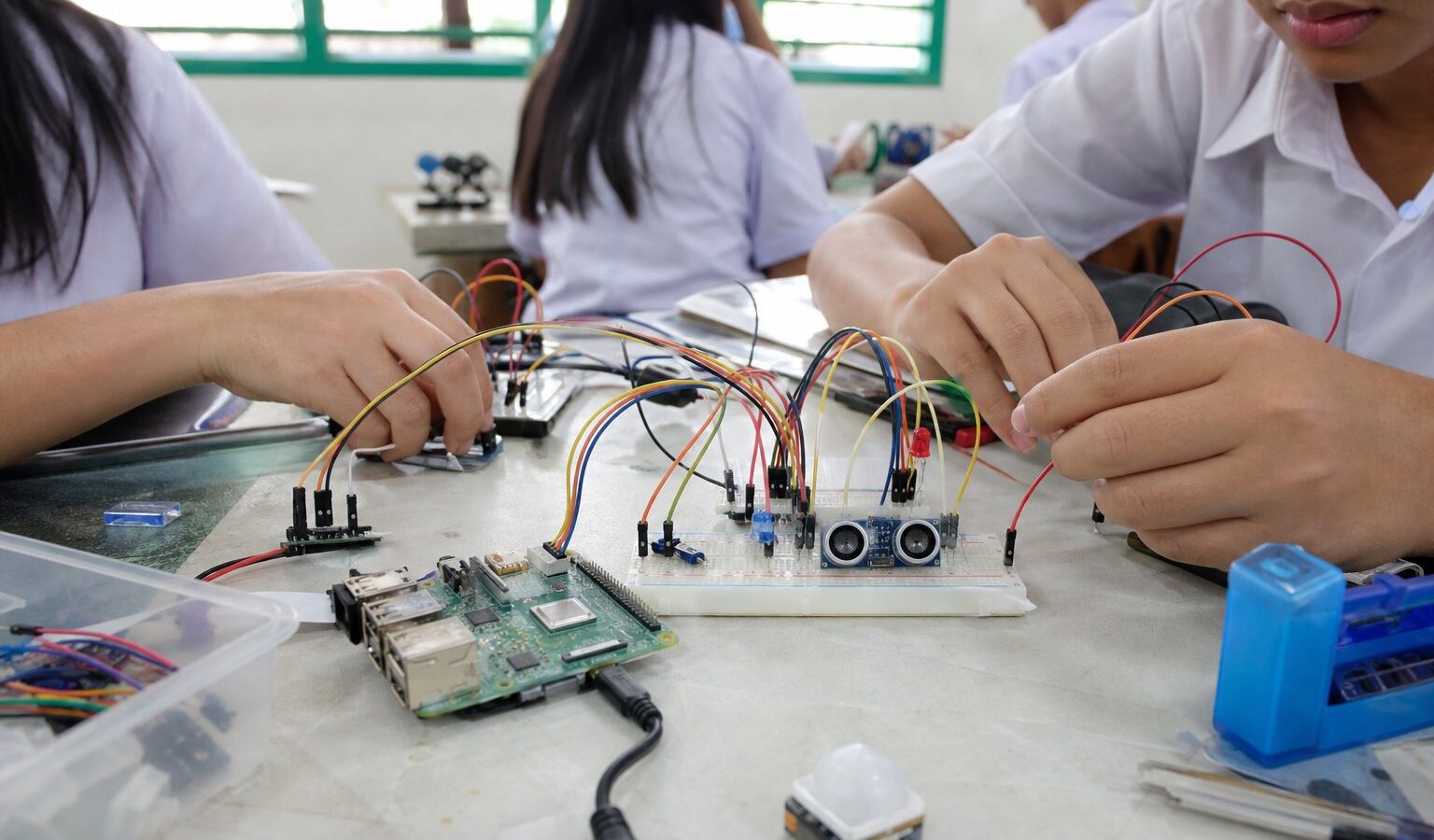
The Raspberry Pi did something for Philippine tech education that no curriculum reform managed: it made hardware experimentation cheap enough for a public-school robotics club. A decade of IoT and robotics electives later, the boards are still the workhorse — and the training scene around them has quietly matured.
From training-room topic to classroom staple
Internet of Things and Raspberry Pi workshops were already on Manila training menus by the mid-2010s, typically as weekend intensives for hobbyists and teachers. The durable version turned out to be institutional: senior-high ICT strands and university engineering orgs adopted the Pi as the default platform for sensor projects, and robotics competitions gave the clubs somewhere to point their builds.
The hardware economics explain the staying power. A classroom set of microcontrollers costs less than one laptop, survives student handling, and fails in ways that teach debugging. Nothing else in the curriculum delivers voltage, code and networking in a single object.
Where IoT skills actually cash out locally
The local job market for pure IoT roles stays narrow — but the skills compound sideways. Smart-agriculture pilots, fleet telematics, and building-management systems all hire people who can wrangle sensors and MQTT brokers, usually under titles like “systems engineer” that never say IoT. For students, the honest framing: the Pi projects are a gateway drug into either embedded work or general software development, and the bootcamp route takes over from there for the software-inclined.
The robotics-club generation is also overrepresented at the hackathon circuit’s hardware tables — the teams that show up with a sensor rig while everyone else demos a web app. Judges remember the rig — partly because hardware demos fail honestly. A web app can hide its rough edges behind a rehearsed click-path; a sensor rig either reads the soil moisture in front of the judges or it doesn’t. Teams that survive that kind of demo pressure tend to interview well for exactly the same reason.
Starting a program from nothing
The startup cost of a classroom IoT program is one of education’s honest bargains: a handful of single-board computers, sensor kits, and a teacher willing to learn alongside the students. The robotics-competition calendar supplies the motivation structure — regional qualifiers give a club a deadline, and deadlines finish projects. Schools that started with donated or hand-me-down boards a decade ago now field competition teams; the constraint was never the hardware budget, it was one adult willing to own the after-class hours.
The failure mode to design against is the display-case syndrome: kits bought with year-end budget, used for one demo, then locked in a cabinet against breakage. Boards in a cabinet teach nothing. The programs that compound treat breakage as tuition — a fried board is a lesson in current draw, a corrupted SD card a lesson in backups — and budget replacements accordingly.
Frequently asked questions
What board should a Philippine classroom start with?
Raspberry Pi remains the default for sensor-and-network projects — cheap, durable under student handling, and it fails in ways that teach debugging. Microcontroller boards extend the kit once the basics land.
Is IoT a realistic career in the Philippines?
Pure IoT roles stay narrow, but the skills cash out sideways — smart-agriculture pilots, fleet telematics and building-management systems all hire sensor-literate engineers, usually under generic systems titles.
What do IoT skills lead to for students?
Either embedded work or general software development — the Pi projects are the gateway, and the bootcamp route takes over for the software-inclined. Robotics-club alumni are also overrepresented at hackathon hardware tables.
Why did Raspberry Pi succeed in classrooms where curriculum reforms didn’t?
Economics and physicality: a classroom set costs less than one laptop, survives handling, and delivers voltage, code and networking in a single object nothing else in the curriculum matches.