KahelOS holds a distinction no other project can claim: the first — and still the only — Filipino Linux distribution built on the rolling-release model, running Arch Linux under a GNOME desktop. The name comes from kahel, Tagalog for orange, and the project wore its origins proudly at kahelos.org.
What made it different
Arch Linux in the late 2000s was a famously manual distribution — respected, and unfriendly. KahelOS took Arch’s rolling-release core and shipped it with GNOME preconfigured, which made it the first non-beta release of that combination anywhere in the community, not just in the Philippines. Filipino users got a homegrown OS that updated continuously instead of demanding reinstalls every version cycle.
The technical bet deserves spelling out. In 2009-era desktop Linux, the mainstream distributions shipped in fixed releases: install, use for six months, back up, reinstall. Arch’s rolling model — update forever, never reinstall — was considered expert territory, largely because Arch shipped no desktop by default and expected users to assemble one from the wiki. Preconfiguring GNOME on top of that base was exactly the kind of unglamorous integration work that makes a system usable, and it’s the part reviewers of the era consistently praised.
The project positioned itself as more than a technology product. In its own framing, KahelOS was not just another entry added to the thousands of free distributions — it was proof that a Philippine team could maintain serious open-source infrastructure. For the local community, that mattered more than the install numbers ever did.
Where it sat in the local open-source scene
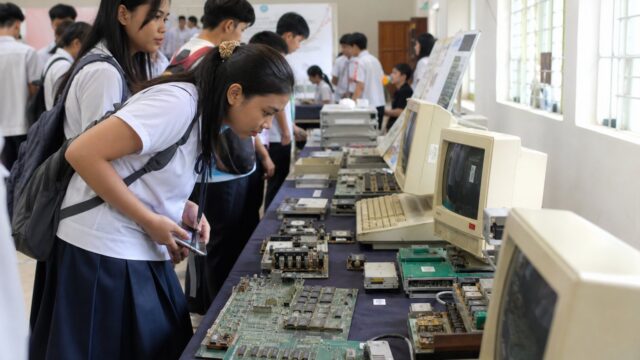
KahelOS was a fixture of the same circle that ran the Open Source Museum and the Linux Day meetups — the loose network of advocates, companies and student groups that carried Philippine open source through the 2010s. Demonstrations of the distro were a standard station at community events, sitting alongside exhibits on the history of free software.
Rolling-release Arch with GNOME eventually became a crowded category worldwide — Manjaro GNOME alone now serves the niche KahelOS pioneered. That takes nothing from the historical fact: a Filipino team got there first, and documented Philippine tech history should say so. The distro’s story is part of why the local developer-education scene has always had an open-source streak wider than its neighbors’.
Can you still run it?
Installer images circulated through the usual distro-watch channels of the era, and archived ISOs still surface in community mirrors — but a rolling-release distribution that stops rolling is a snapshot, not an operating system. The project’s public activity fades in the mid-2010s, and anyone booting an old image today gets a museum piece: package repositories long gone, GNOME several generations behind. The practical successor path for curious users is stock Arch or Manjaro GNOME; the historical value of KahelOS sits in what it proved, not in what it still boots.
That proof aged well. The same community circle that maintained the distro kept surfacing across the decade — at the Linux Day meetups, in the Open Source Museum’s school tours, and eventually in the training rooms where a generation of Filipino sysadmins first touched a package manager.
Frequently asked questions
What was KahelOS?
A Filipino Linux distribution built on Arch Linux with a preconfigured GNOME desktop — the first and only local distro to ship Arch’s rolling-release model, and by its own documented claim the first non-beta Arch+GNOME release in the wider community.
What does the name KahelOS mean?
Kahel is Tagalog for orange, the project’s signature color. The name planted the flag deliberately: a Linux distribution that announced itself as Filipino in its first syllable.
Is KahelOS still maintained?
The public trail — releases, site updates at kahelos.org — goes quiet in the mid-2010s. Archived installer images still exist, but with the package repositories gone, a fresh install is an artifact rather than a usable desktop.
Why does a discontinued distro matter?
Because it demonstrated that a Philippine team could build and maintain serious open-source infrastructure, years before the local developer-education boom. Every “Filipinos are only users, not builders” argument had to get past KahelOS first.